

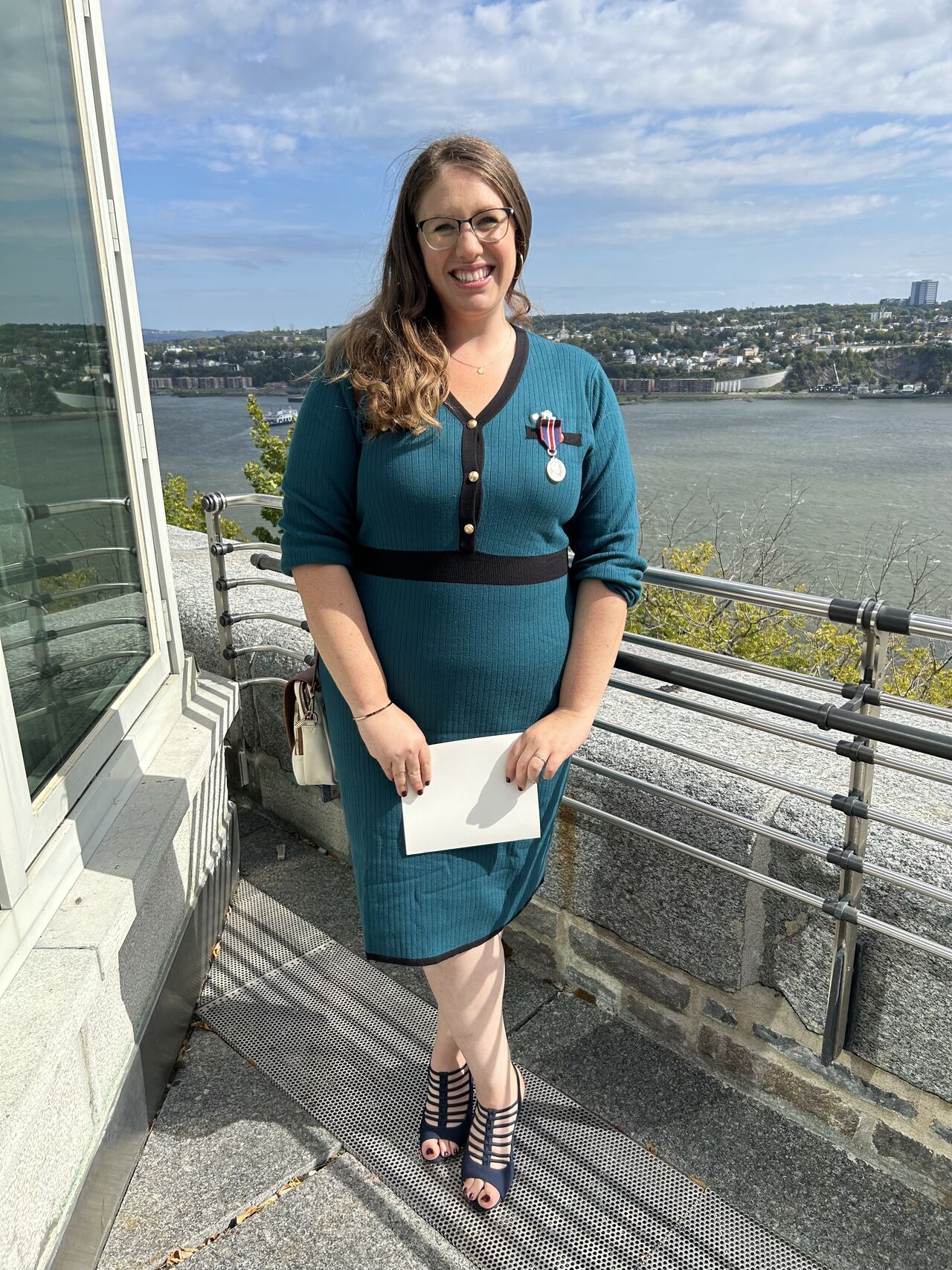
Hailey Hechtman has spent her career close to the human side of social impact — from volunteering on a distress line and leading local service organizations to now leading Unsinkable, a national charity centred on the power of personal storytelling. That progression has given her a perspective that moves between the individual in front of her and the systems, teams and partnerships required to create impact at scale.
Her answers also reach well beyond the nonprofit sector. They raise questions relevant to any leader: When does growth strengthen the mission rather than dilute it? How do you measure impact beyond reach? What makes a partnership genuinely aligned? How do you build a culture people can actually feel? And what becomes more valuable when polished, AI-generated communication is suddenly everywhere?
Throughout the conversation, one idea keeps surfacing: depth matters — in stories, relationships, partnerships, leadership and the way organizations choose to grow.
That is where this conversation begins.
When Storytelling Creates Connection — Not Just Visibility
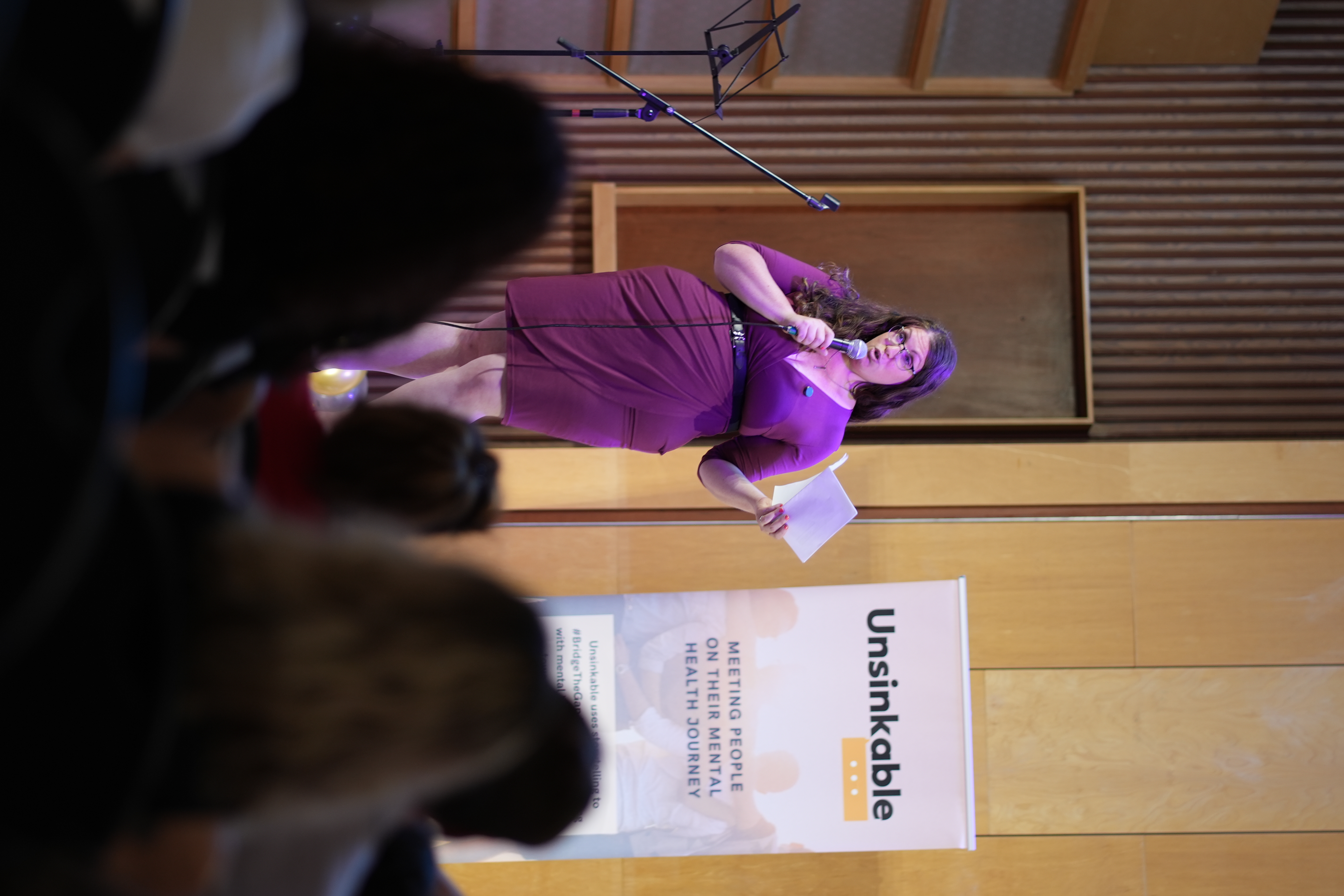
A story can reach an audience without creating a connection. For Hailey Hechtman, Executive Director of Unsinkable, the difference begins with the context, humanity and care given to both the storyteller and the people listening.
Content made to attract clicks often isolates the most repeatable part of an experience. The framing falls away; so does consideration for the person behind what is shared. A human story makes room for something less polished: nuance, a pause, reflection and meaning-making.
“A story intended to connect doesn’t simply look to reach more people. It seeks to cultivate depth.”
Hailey’s interest is not simply in how far a story travels. It is in what happens when someone encounters it: whether they process their feelings and perceptions, become curious, and find room to understand an experience more deeply. The storyteller, meanwhile, should be empowered to show up as they are.
That distinction runs through her thinking about organizational leadership, growth, partnerships and workplace well-being. The question is not only how to do more. It is how to build the conditions that make the work meaningful — and allow its impact to last.
From Helping People to Building the Conditions for Impact
Hailey feels lucky to have had such multifaceted experiences: beginning as a distress line volunteer, moving into leadership in local service organizations, and now running a national charity centred on personal storytelling. As she shifted from helping people to building systems, she learned the importance of taking an ecosystem approach.
With a person in front of you, the impulse is to give everything you can. At an organizational level, that same impulse can become a temptation to be everything to everyone. Her answer is an ecosystem approach: understand the unique value your organization offers and how it contributes to the bigger picture.
That means knowing how best you can help, deepening that strength, curating a team around your mission and activating the supporting conditions around you. It also means reaching out to those who fill the gaps or lean into other areas that touch the work you are doing.
For Hailey, embracing collaboration means seeing both the unique value of your work and the capacity it offers to the bigger picture. The aim is for the network of your community to expand, with different organizations contributing where they can best help.
Growth Should Take You Deeper, Not Simply Wider
For mission-driven organizations, expansion can be both a temptation and a pressure. Hailey points to funders who often direct resources toward new initiatives rather than existing programming. An opportunity to grow can therefore arrive with incentives that do not necessarily match the organization’s core purpose.
She returns to two fundamental questions: What problem are we trying to solve, and how does this expansion get us closer to the solution? Is someone already doing this, or better suited to doing it, with whom we could collaborate rather than starting something new?
The distinction matters because growth can bring resources and attention while still pulling an organization into a different lane. If it stretches capacity without advancing the vision, or enters a space where others are better positioned to help, it may not be sustainable.
“I always try to sense-make where this new concept is coming from,” Hailey explains. Whenever possible, she looks at how to “dive deeper than wider.” Partnership allows an organization to gain momentum and reach without stretching beyond its mission.
“Partnership to me is the greatest key to growth that doesn’t rely on an organization stretching beyond the mission.”
Reach Is Easy to Count. Impact Is Harder.
Reach and social media analytics show how many eyes something has been in front of. They say much less about how it was received. Hailey looks beyond those vanity metrics to comments, messages, surveys and other feedback from the audience.
Those responses can help reveal both engagement with a story and its longer-term value. What did it prompt someone to consider? What conversation continued after the content ended? The work of assessing impact reaches beyond the moment of viewing.
At Unsinkable, self-reflection and discussion guides now accompany video stories. An individual can use a guide as a journaling prompt to build self-awareness. A team or group of friends can use it to begin a conversation and go deeper together.
“Impact is about ripple effect.”
For Hailey, the question is how something permeates and leaves “a legacy of curiosity.” Creating prompts and other ways of bringing that to the forefront helps a story continue through journaling, self-awareness and conversations with a team or group of friends.
When the Story Belongs to Someone Else
Lived-experience storytelling begins, in Hailey’s account, with consent, agency and strengths. Before choosing a format or an audience, there is a more personal conversation: is this person ready to share?
Understanding why someone wants to tell their story, what they hope for, how open they are to public feedback and how much of the experience they have processed helps establish whether the time is right. Readiness is part of the work, not something to assume because a story would be compelling.
If the person is ready, ownership includes choosing the medium — a stage, video, writing or creative expression — as well as how much to share and which settings feel aligned. Those decisions shape how the story comes to life and how it is distributed.
The responsibility continues after sharing. A feedback mechanism allows the storyteller to hear how the story was received, reflect and offer their own insights. They should also understand whether and how it will be used in the future.
For organizations introducing personal storytelling internally, Hailey encourages leaders to model first before inviting their team to share. She suggests starting with “micro storytelling moments” so that the practice can become part of the culture.
Partnerships Work When the Relationship Goes Beyond the Transaction
Alignment begins with values, purpose and goals. A corporate or community collaboration needs a shared mission, or at least a desired impact in common that becomes stronger when the organizations come together.
The contributions need not be identical. A community organization may bring programs and skills while a corporation brings resources and reach. Partners might connect their audiences, or bring advocacy together with close ties to the community affected by that work.
Resources and credibility matter, but Hailey sees them as difficult to sustain without common ground. The relationship needs more than an initial exchange of benefits.
“In the long term it should also be about relationships.”
Her questions turn toward the people involved: how are the teams participating? How do they build rapport and shared understanding? Is there an exchange of insights, ideas, learning and expertise?
For Hailey, those questions about the teams, their rapport and their exchange of learning are factors that can make a big difference. Resources and reach matter, but shared values, purpose and desired impact give the relationship its common ground.
When Different Stakeholders Define Success Differently
Boards, funders, teams, partners, storytellers and community members can bring different priorities and different definitions of success. Hailey acknowledges the challenge of juggling them. Her point of return is the vision and the problem the organization is trying to solve.
“Start with the vision and the problem that you are trying to solve.”
Strategy becomes more informed when the people closest to the intended change are involved from the beginning. Their perspectives can then be consolidated and brought to decision-makers at other levels, rather than added after a plan has already taken shape.
Stories help carry those voices into the room. They remind a board, funder or partner why the work exists and make the people behind the numbers visible. A video or an invitation to see the work in action can create a personal understanding that is difficult to gain from a report or proposal alone.
Hailey’s emphasis is on showcasing the strengths, the why and the theory of change the organization is building toward — and inviting the board, funders and partners to join. She sees that invitation as more activating than trying to fit the organization’s hopes into “a narrow box of their objectives.”
Sustainable Leadership Requires Letting Other People Lead
Meaningful work can be harder to switch off from, not easier. When the mission feels personal, Hailey says, a leader can absorb more than the accountability of the job. They can feel responsible for the change being pursued through every program and priority.
Sustainability therefore requires intentional time off and space for life outside work, even when the work itself feels worthwhile. It also requires noticing when you are too close to an issue to make the most informed decision.
Letting others lead is part of that self-understanding: recognizing where someone else has more knowledge or capacity, even when you desperately want to touch every corner of the work. Responsibility does not always mean remaining at the centre of every decision.
For Hailey, this also means cultivating a community of peers in similar roles at other organizations — people she can learn from, lean on and open up to when things get hard. She describes what that has meant in her own life:
“I have found throughout my career the single most rewarding thing I have done for myself is build a close-knit coven of peers who I look up to, admire and who I never feel alone around.”
That feeling of never being alone around people she looks up to and admires is part of how she sustains herself. It sits alongside intentional time off, making space outside work and learning to let others lead.
Culture Is Built Around People, Not Programs
Hailey recalls being told that climate can change in an instant, while culture is built over time. The distinction helps explain why a visible workplace wellness initiative is not the same as a culture that supports well-being.
Investing in that culture means knowing people beyond their tasks: building real relationships, creating trust through connection and modelling vulnerability as a leader. It means making room for fun, mistakes and stories as well as the work itself.
Honest conversations help you find out the why behind the people you surround yourself with. When you embrace their strengths, Hailey says, the culture begins to shape around them. It is not built by all the tasks and activities; it is customized by the people inside the organization, their needs, their motivations and their connection to one another.
Those connections lead to lasting enthusiasm. Outlets for creativity, exploring and autonomy give people opportunities to contribute in new ways and grow as people and as a team. Her answer returns to real relationships rather than a list of wellness activities.
What Becomes More Valuable in the Age of AI?
Heart.
That is Hailey’s one-word answer. AI-generated content, algorithmic expectations around posting and increasingly polished communication influence what people see and anticipate on the platforms they use. Her focus is on what makes a human story distinctive within that environment.
First-person accounts carry nuance, context, personal truth, messy middles and emotional depth. They are not defined by perfect delivery. Stories shared from wisdom and experience stay with us, help us see ourselves mirrored back and encourage reflection and conversations with people around us.
A story might be spoken shakily on a stage, recorded on an iPhone in a living room or written as a poem. Its power is not dependent on a polished production. Creative expression can hold something uniquely and beautifully human.
“A story told from the heart can be felt.”
Hailey contrasts the quick hits that can feel like success with stories shared from wisdom and experience that stay with us. Her emphasis remains on personal truth, messy middles and emotional depth — and the thoughtful reflection and conversations those stories encourage.
IN HER OWN WORDS
Four Questions We Left With Hailey
Four moments from our conversation that reveal more of the thinking behind the ideas explored throughout this feature.
01Growth Without Losing the Mission
How do you know when growth is actually strengthening the mission — and when it risks diluting it?
What is the problem that we are trying to solve and how does this expansion get us closer to the solution? … Is there someone in the space who is already doing this or better suited to doing this that we can collaborate with rather than starting something new?
Growth for the sake of growth when it funnels you away from your core purpose … may not be sustainable or aligned with your purpose. I always try to sense-make where this new concept is coming from …
Dive deeper than wider.
Partnership to me is the greatest key to growth that doesn’t rely on an organization stretching beyond the mission while still helping you gain momentum and reach.
02How Do You Know Impact Is Real?
Reach is easy to count. How do you know whether awareness, storytelling or engagement is actually translating into impact?
… those vanity metrics give little indication of how something is ultimately received. Comments, messages, surveys and other ways of gathering insights directly from the audience can be such a helpful tool of better assessing both engagement with a story and its long term value to those who have witnessed it.
… we have been … creating self-reflection and discussion guides to accompany our video stories, encouraging individuals watching to use the guide as a journaling prompt to build self-awareness while giving groups a great conversation starter that will allow them to dive deeper with their team or their group of friends.
Impact is about ripple effect.
How does something permeate and leave a legacy of curiosity. Creating prompts and other ways of bringing that to the forefront is key.
03What Sustainable Leadership Actually Requires
What has changed in how you think about sustainable leadership — for yourself and for the people you lead?
For me, sustainable leadership starts with recognizing that when you are passionate about what you do … it can actually be harder to switch off. It feels personal and therefore you often absorb more than the accountability of the job but rather feel responsible for the mission …
This means having to be intentional about taking time off, making space to do things outside of your work … and recognizing when you are too close to something to make the most informed decision.
It means understanding yourself and learning to let others lead in areas where you are not as knowledgeable or do not have as much capacity …
It means cultivating a community of peers … that you can learn from, lean on and open up to when things get hard.
04What Becomes More Valuable in the Age of AI?
As AI-generated content, constant posting and increasingly polished communication become more common, what becomes more valuable?
Heart.
… real human stories, told from a first-person account, with nuance, context, personal truth, messy middles and emotional depth are impossible to replicate. … the true stories, shared from wisdom and experience stay with us, they help us see ourselves mirrored back, they encourage us to thoughtfully reflect and to engage in conversations with the people around us.
… whether spoken shakily on a stage, taken on an iPhone in our living room or written as a poem, creative expression is something that is uniquely, and beautifully human.
A story told from the heart can be felt.
1 / 4
RELATED INTELLIGENCE
MÄVVĪNCLASS · Event Recaps
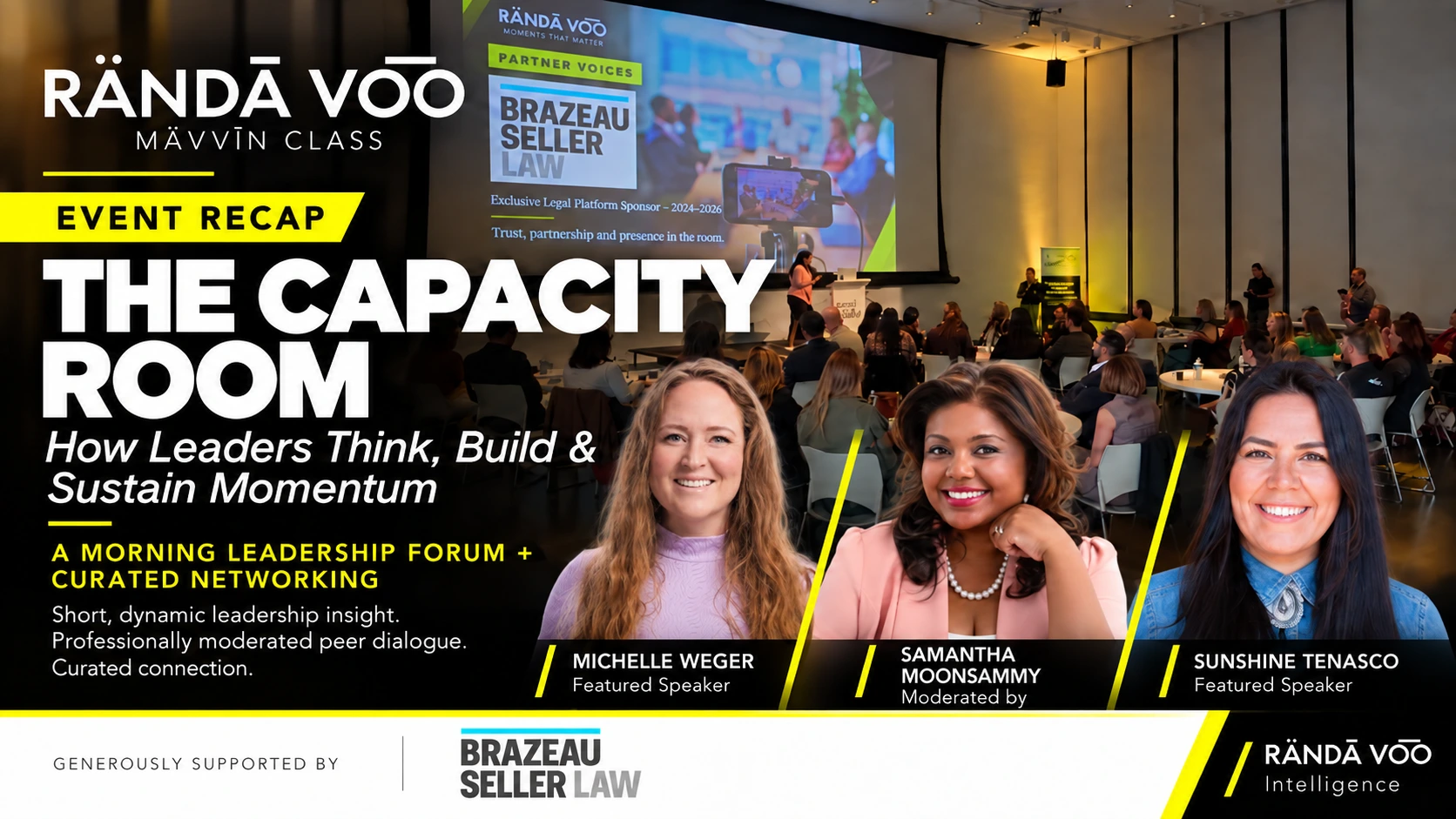
Inside The Capacity Room: How Leaders Think, Build & Sustain Momentum
Sunshine Tenasco and Michelle Weger brought two perspectives on energy, leadership and sustainable high performance to MÄVVĪNCLASS—before six tables of Ottawa professionals took the conversation further.
Business Intelligence
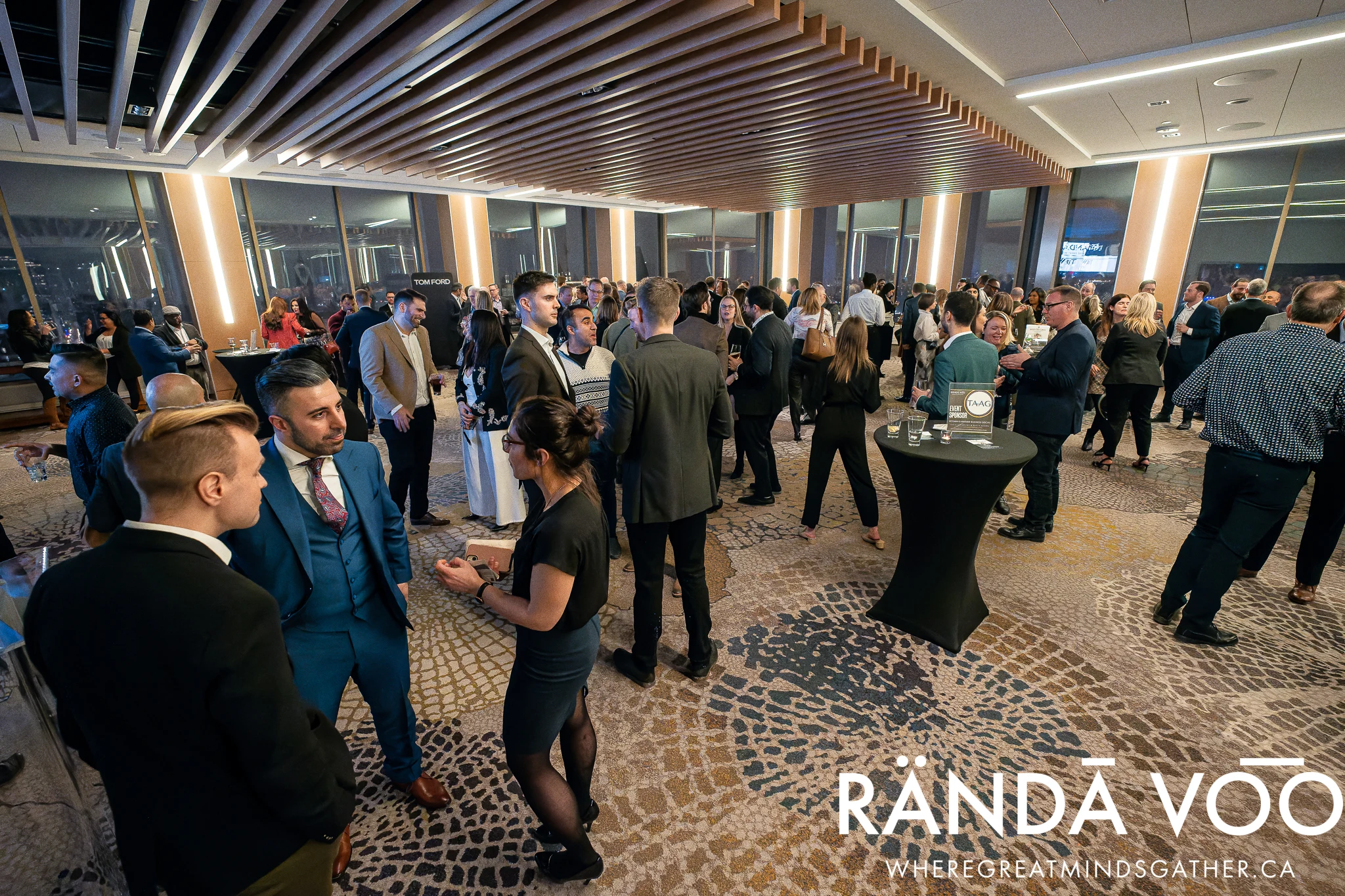
The Business of Bringing People Together
What makes a professional gathering valuable long after the event ends? Explore how meaningful connections, business partnerships, exceptional experiences, and local community engagement come together through RÄNDĀ VO͞O.
Connect in person