

The First Design Decision Isn’t Visual
Every square foot of commercial real estate has a cost. For someone opening a location, renovating a shop or investing in a rebrand, that makes design a business decision before it becomes a visual one. Jesse Arnold sees that connection every day. As the owner and principal designer of Ottawa-based Inicio Design, he starts with what a business is trying to accomplish—not with a colour palette or a rendering.
Who will use the space? What makes the company different? What do its customers expect, and what can the budget realistically support? Jesse wants those questions answered before the design takes shape. As he explains, “There’s no point creating something that looks fantastic if it doesn’t function for the people using it.”
That approach has implications beyond architecture and interiors. A good-looking store can still be confusing to navigate; an impressive hospitality space can still be uncomfortable for guests or difficult for employees to operate. For Jesse, creative work earns its value when it helps a business function, communicate and grow.
The Brand Customers Actually Experience
A brand isn’t experienced only through advertising. Customers encounter it through a store’s layout, finishes, lighting, signage and atmosphere. Jesse considers physical environments increasingly connected to marketing and brand awareness: for many businesses, the space is one of the first real encounters customers have with the brand.
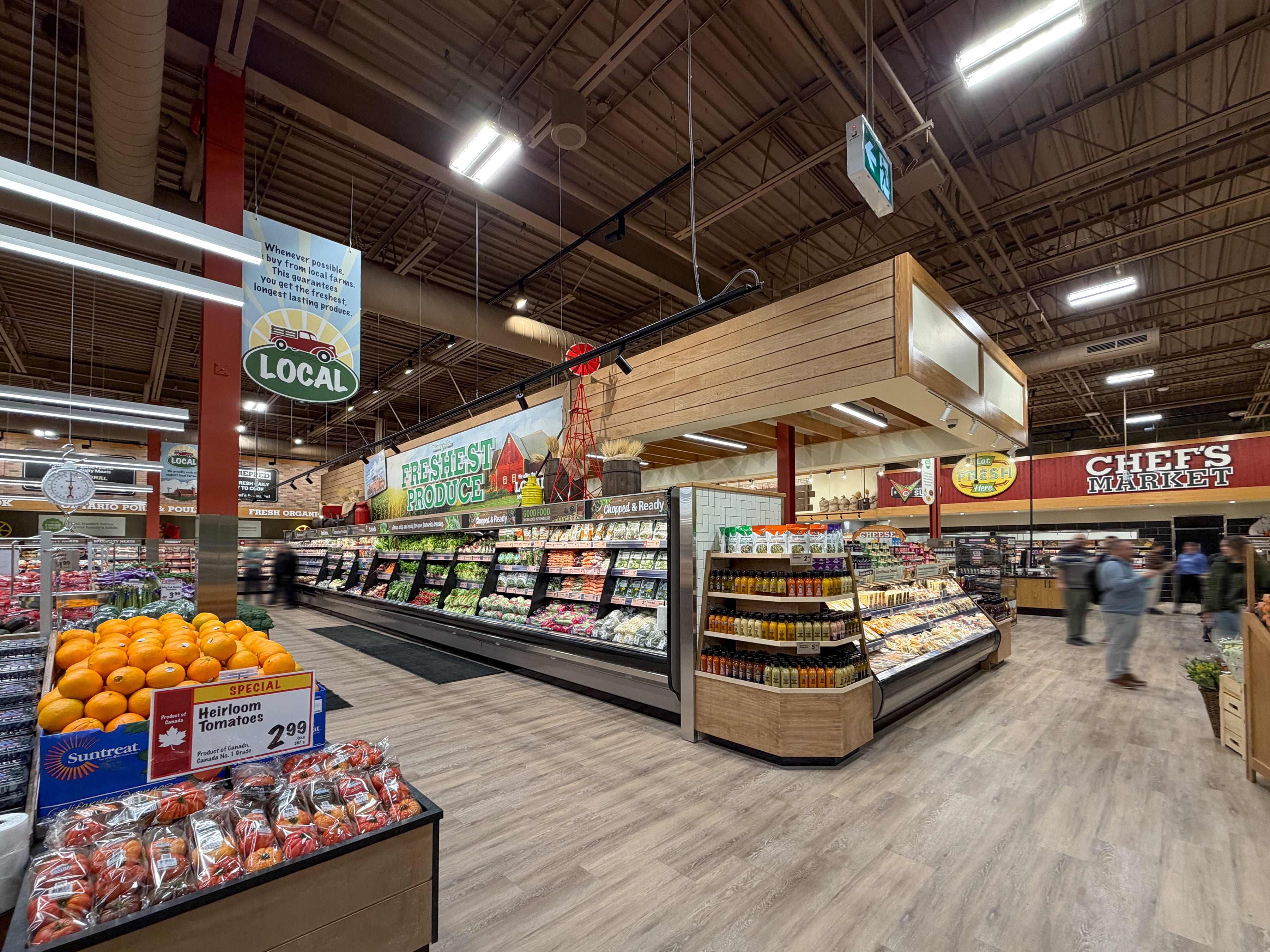
His work with recognizable names such as Farm Boy and Quickie illustrates a challenge faced by businesses with multiple locations. Customers expect familiarity, while each new property gives the company an opportunity to refine the experience. Established brand guidelines matter, but they should not eliminate thoughtful variation. By reworking material palettes, applications and spatial details, a location can feel unmistakably part of the business without becoming an exact copy of another.
“Consistency doesn’t have to mean repetition.” — Jesse Arnold
That observation applies to any growing organization. Consistency protects recognition and trust; improvement prevents a business from standing still. The real question is which qualities should remain familiar and where the next version can work better.
A Recognized Project
Inicio Design has also announced that its Farm Boy Collingwood project received a 2026 Silver Certification from the GRANDS PRIX DU DESIGN awards.


The Details Business Owners Underestimate
When owners think about a new commercial space, attention often gravitates toward the most visible choices. Jesse enjoys creative ambition, but he cautions against investing too heavily in features designed mainly to look good in photographs. A trendy detail may produce an immediate reaction while dating the space sooner than expected.
Two less glamorous decisions often deserve more attention: lighting and acoustics. Lighting can transform the atmosphere, help merchandise stand out and make an environment more welcoming. Acoustics can determine whether a restaurant invites conversation or becomes so loud that customers want to leave. Both affect the experience long after the opening photographs have been taken.
The same test applies to customer movement and employee workflow. A successful environment makes it easy for customers to find their way and for staff to work efficiently. Jesse hopes good design ultimately supports customer retention and spending, but those are intended commercial benefits—not outcomes we should claim for any particular project without evidence.
For the business owner: Before approving the most eye-catching design feature, ask whether the less obvious decisions will make the everyday experience better.
When a Designer Becomes a Founder
Starting Inicio Design gave Jesse freedom he had valued during his time in established design teams: the ability to explore an idea, take a risk and build a practice on his own terms. He draws inspiration from his travels and the spaces he encounters, and he enjoys clients willing to try something unfamiliar.
But independence brought an entirely different workload. Finances, marketing, scheduling, resources and client relationships became his responsibility alongside the creative work. That shift resonates with founders in every profession: excelling at the craft and managing the enterprise around it are different jobs.
Jesse has found that winning work still depends on word of mouth, authentic relationships and consistently making the effort to meet people. Technical skill isn’t enough if prospective clients don’t know the person or practice behind it. He has also learned that not every potential project is the right project; sometimes the difficult decision is to say no.
For entrepreneurs reading this, the lesson is less about design than about turning expertise into a business people can discover, trust and choose. Reputation grows through the quality of work, but relationships help that work become visible.
Where to Invest—and Where to Adapt
Commercial projects are shaped by construction conditions, timelines, materials and budgets. Jesse protects the fundamentals of how the space functions—customer flow, employee movement and the overall experience—because those decisions can make or break a project. When a design needs flexibility, materials and finishes often offer more room to be resourceful.
Today’s laminates, architectural films and other alternatives can achieve an intentional result without using the most expensive option in every position. The goal isn’t indiscriminate cost-cutting; it’s prioritizing the parts of a project that materially affect how the space works.
“I think good commercial design is knowing where to spend the money and where you can be a little more resourceful.” — Jesse Arnold
Another decision is when to challenge the client. Trust usually takes time: a first project involves learning how the owner thinks, what matters to them and how they respond to advice. With a stronger relationship and relevant experience, a designer can explain why an idea may not work and offer a better alternative. Jesse also understands that the person paying for the project has the final call. Knowing when to advocate—and when to adapt—is part of sound professional judgment.
AI Can Imagine It. Can You Build It?
Artificial intelligence is changing the pace at which creative teams can explore and communicate ideas. Jesse sees genuine value in early concept work: mood boards, brainstorming and discovery sessions can benefit from tools that make possibilities faster to visualize.
His caution begins when an attractive AI-generated image is treated like a fully resolved design. Traditional 3D visualization can account for real dimensions, materials and constructible details. A generative image may take artistic liberties that are difficult to reproduce on a real site or within a real budget. That gap matters when a client believes a visual is ready to build.
For Jesse, AI is useful for inspiration and certain repetitive tasks, but it doesn’t replace the judgment and creative responsibility clients hire him to provide. There’s a broader leadership lesson: faster ideas are valuable only if someone can evaluate which ones are feasible, relevant and worth delivering.
Before the First Drawing: Five Questions Worth Asking
Whether you’re planning a new location, renovation or rebrand, Jesse’s approach suggests a short decision guide. These questions won’t replace a designer’s expertise, but answering them will make the first conversation more productive.
What are we trying to achieve?
Identify the business result: easier operations, better customer experience, stronger brand presence, expansion or a specific problem to solve.
How will people use the space?
Consider customer flow and employee work, not only the look of the finished room.
What must feel recognizably ours?
Decide which brand qualities need consistency and where the new environment can improve on the last.
Where will the investment matter most?
Weigh layout, lighting, acoustics and practical details alongside highly visible finishes.
What can we realistically afford?
Account for construction, equipment, professional fees and the other costs of opening or renovating.
You don’t need every answer settled before calling a designer. But clarity about the goal and the budget gives the work a stronger starting point.
In His Own Words
Four questions from RÄNDĀ VO͞O’s interview with Jesse Arnold. The questions and answers below are reproduced verbatim from Jesse’s submitted responses.
01
Owners often arrive with a wish list. In your experience, what is one design decision clients tend to overvalue, and one they tend to undervalue? A practical answer here is encouraged.
A wish list is always a great starting point. It gives me a sense of what a client values and what they’re hoping to achieve.
I would say clients sometimes overvalue anything considered “Instagrammable.” There’s nothing wrong with wanting something visually interesting but chasing trends can date a space very quickly. I’d much rather create something unique that still feels relevant years down the road.
On the other hand, lighting and acoustics are two things I think are often undervalued. Good lighting can completely change the atmosphere of a space, adding drama, warmth, or highlighting something that might otherwise go unnoticed. The same goes for acoustics. A loud, echoey restaurant or retail space can be the difference between an inviting experience and one that makes people want to leave. Those details matter more than people realize.
02
You built experience inside established design teams before founding Inicio. What changed when your own name, reputation and business became directly tied to the outcome?
I would say the biggest change has been the freedom, but also the responsibility that comes with it.
Working within established design teams taught me a lot, but running my own practice has given me the freedom to explore ideas on my own terms. I find myself paying more attention to the little details, drawing inspiration from my own experiences, travels, and the places I visit.
There’s something incredibly refreshing about being able to take an idea, take a risk, and run with it, without getting caught up in endless internal revisions, office politics, or the dreaded “that’s just how we’ve always done it” mentality.
Of course, that freedom comes with responsibility. Suddenly, you’re not just the designer. You’re responsible for your own finances, marketing, resources, scheduling, client relationships, and everything else that comes with keeping a business running. You must be strategic with your time and learn to trust your gut, because there’s no one else making those decisions for you.
I’ve learned that being a good designer and running a successful design business are two very different things. But having that independence and knowing that successes and failures are ultimately yours, makes it even more rewarding.
03
What have you learned about winning work as a founder that you could not have learned by being a strong designer alone? Think positioning, trust, relationships, communicating value or knowing when to say no.
It’s still largely about word of mouth, making connections, and putting yourself out there.
I think that’s one of the biggest differences when you take on the founder role. You can be a great designer, but that doesn’t necessarily mean people know who you are or what you can offer. You have to be willing to introduce yourself, build relationships, and keep showing up.
I also think there’s a real appreciation for authenticity. People want to know who they’re working with and being genuine about what you do and how you work goes a long way.
Saying no isn’t something I particularly enjoy doing, especially when you’re building a business, but on the rare occasions I have, listening to that little voice has usually proven worthwhile. Not every opportunity is necessarily the right one.
04
3D visualization and AI can make ideas faster to generate and easier to communicate. Where do these tools genuinely improve the work, and where is human judgment still irreplaceable?
This is a tricky one. I think traditional 3D visualization still has an incredibly important role, particularly when it comes to getting a design approved. You’re presenting something that has been thought through, with actual materials, dimensions, and details that can realistically be built.
I don’t think AI is quite there in that respect. It tends to take too much artistic license, and what you end up presenting can be further from reality than you might realize. Presenting a fully AI-generated image as a final design also feels a bit like cheating to me. Creating that atmosphere and vision is ultimately what clients are coming to me for.
Where I do find AI valuable is in the early concept stages. Mood boards, initial ideas, and discovery sessions are great opportunities to use AI, and I don’t see that as being much different from using Pinterest or other sources for inspiration.
It’s also incredibly useful for tedious stuff. Writing, image editing, and a bit of marketing. I’m all for using tools that make my job easier, but I don’t want them doing the actual designing for me.
1 / 4
“A commercial space starts to work when you can feel the brand without needing to see its logo.”
About Jesse Arnold
Jesse Arnold is the Owner & Principal Designer of Inicio Design, an Ottawa-based practice specializing in commercial environments, including grocery, convenience retail and hospitality. His portfolio includes projects for Farm Boy and Quickie. Inicio Design reports a 2026 GRANDS PRIX DU DESIGN Silver Certification for the Farm Boy Collingwood project. Explore Inicio Design
RELATED INTELLIGENCE
RÄNDĀ VO͞O Editorial Series
BUILDER PROFILE
The Aurelius Standard: Why Customer Experience Is a Growth Strategy
Aurelius founder Mike George shares what customer experience, leadership and lasting relationships can teach business leaders about growth.
RÄNDĀ VO͞O Editorial Series

BUILDER PROFILE
The Long Game: Real Estate, Trust & Building Lasting Value with Chris Brown
A candid conversation with real estate entrepreneur Chris Brown on building lasting value, earning trust, navigating uncertainty and the relationships that shape long-term business success.
RÄNDĀ VO͞O EDITORIAL SERIES
BUILDER PROFILE
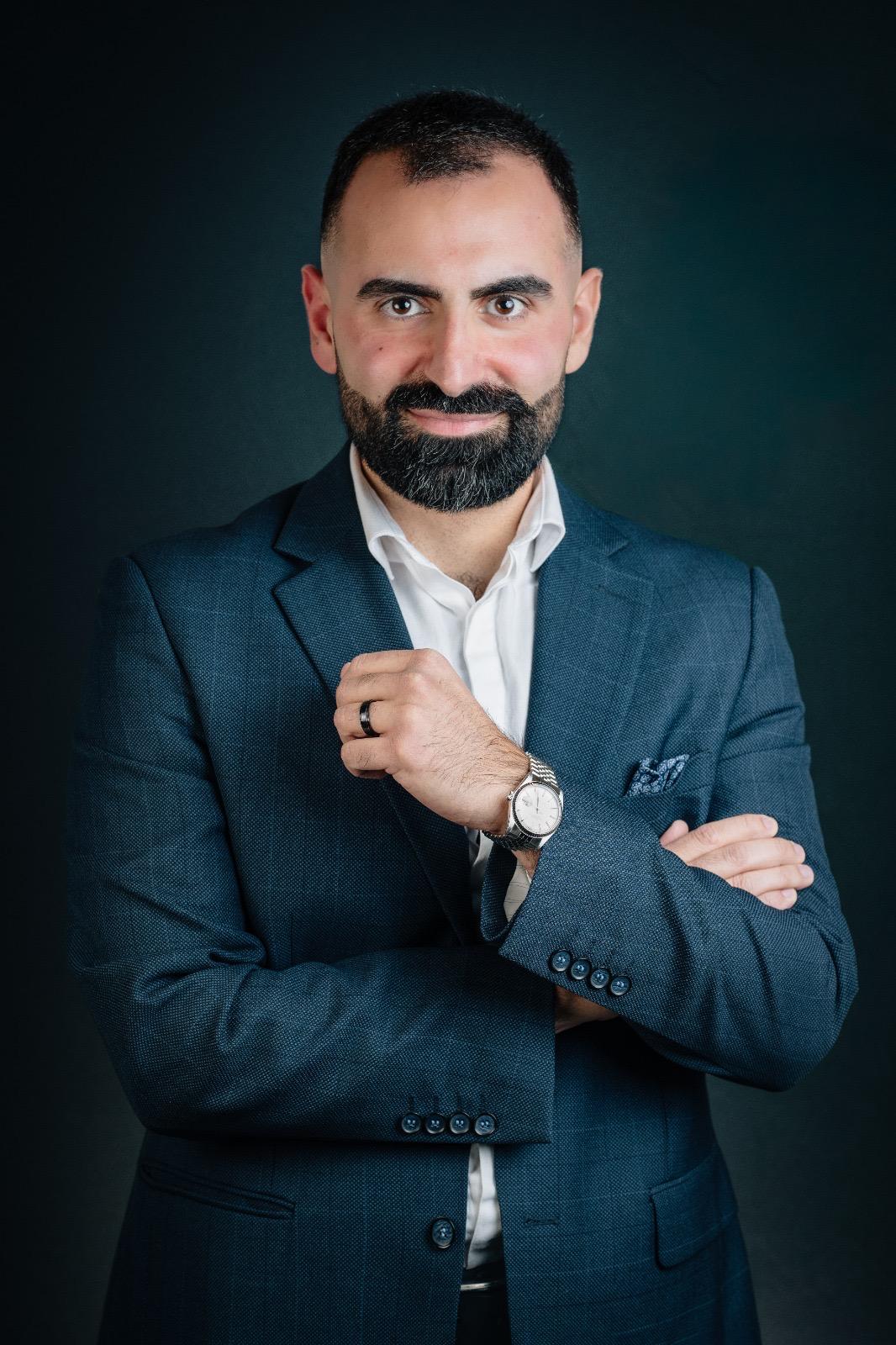
Ali Zaydan | Co-Founder & CEO, Drivisa
Ali Zaydan on Growth, Discipline and Reinventing Driver Education
A candid conversation with Drivisa Co-Founder & CEO Ali Zaydan on ambition, customer trust, innovation, scaling a business and building with speed.
Connect in person
Continue the Conversation
RÄNDĀ VO͞O Business Intelligence features original perspectives from founders, executives and professionals whose experience offers useful lessons in building businesses, leading teams and creating lasting value. RÄNDĀ VO͞O — Where Great Minds Gather.