


Ten years ago, Trisha Pitura and Mélanie Bernard imagined a small children's brand. Today, their company is a Canadian textile business known for authentic Indigenous designs, artist collaborations and locally manufactured products.
The most interesting part of that transformation is not simply what MINI TIPI makes. It is how two friends recognized a different opportunity, learned to build together and decided which values would guide their growth.
Along the way came challenges familiar to many entrepreneurs: uncertainty, supplier delays, manufacturing capacity, competing priorities and decisions made before all the answers were available.
There were also questions particular to their business. How do you bring culturally meaningful designs to market responsibly? How do you ensure artists continue to benefit from their work? And how do you grow a company without diminishing what makes its products meaningful?
As MINI TIPI celebrates ten years in business, RÄNDĀ VO͞O Intelligence invited the founders to reflect on their experiences, their partnership and what they want the next decade to represent.
Their answers offer a look at the decisions behind an Indigenous-owned, women-owned small business in Canada's Ottawa–Gatineau region—and lessons that reach well beyond the textile industry.
01The opportunity they almost didn't know they were building
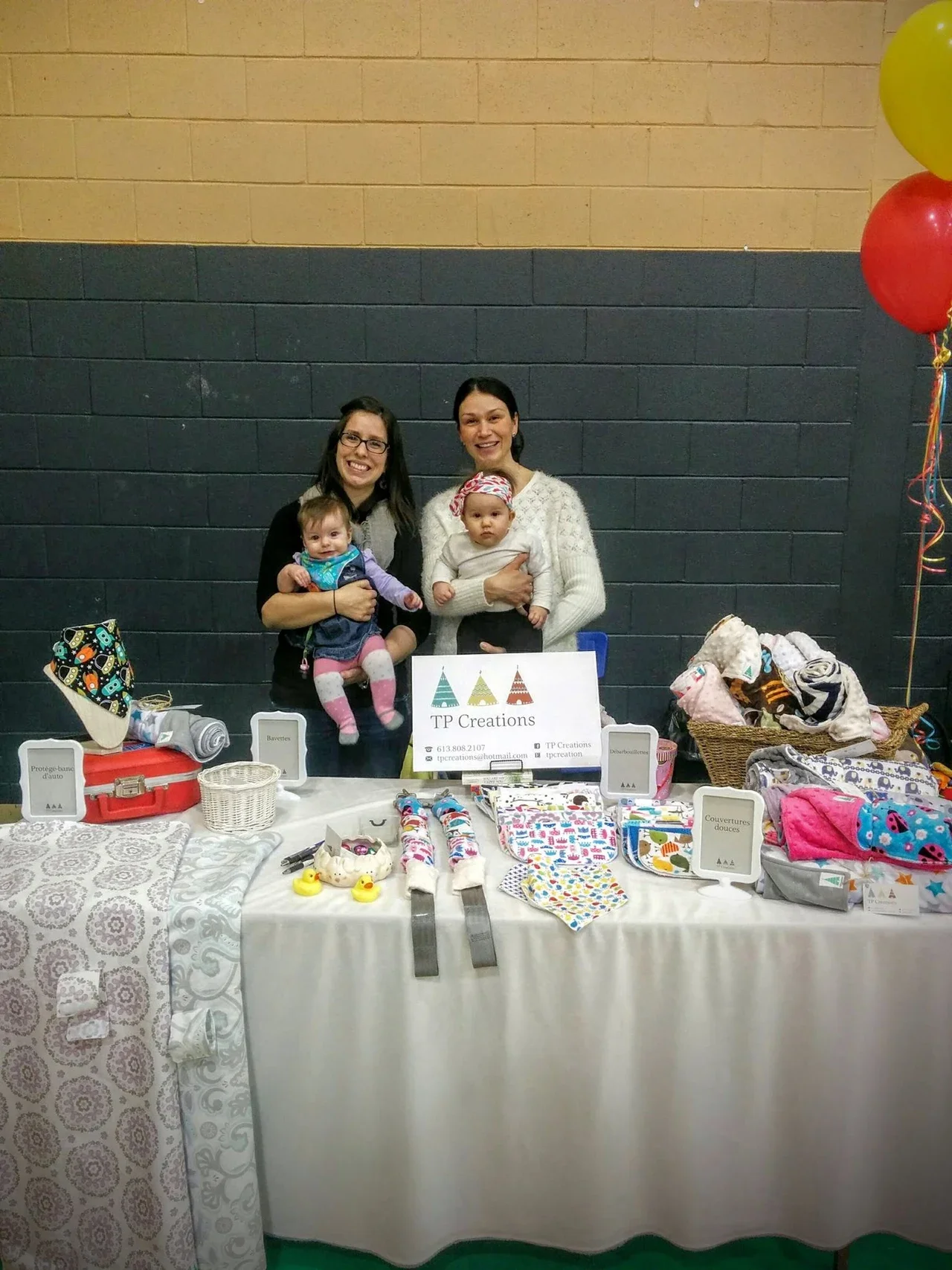
MINI TIPI began in 2016 with a modest idea: a brand for children.
Then Pitura and Bernard encountered a problem. They couldn't find authentic Indigenous fabrics for the products they wanted to create.
Rather than work around that limitation, Pitura developed the company's first print, the Thunderbird. The founders subsequently moved into designing and manufacturing, expanding beyond baby products into blankets and accessories.
The decision changed the nature of the business.
Mélanie recalls that they had to recognize the market gap and let go of the comfort of remaining small. Their customers ultimately followed the company's new direction.
“We made those changes because they felt right, and our clients followed. Sometimes the market doesn’t ask first. It answers.”
Entrepreneurs are often encouraged to listen to their customers. MINI TIPI's story introduces another dimension: sometimes a commercial opportunity becomes visible through the problems founders encounter while trying to build something themselves.
The original children's brand was the starting point, not the final definition of the business.
In entrepreneurial language, this evolution illustrates a pivot: changing an offering or business direction in response to what is learned.
The broader lesson is not to abandon a plan whenever something becomes difficult. It is to recognize when a problem reveals an opportunity worth pursuing.
02Friendship was the beginning. Trust became the work.
The two founders began with shared values, a strong friendship and the belief that they could build something meaningful.
What they could not have anticipated was how much entrepreneurship would require them to grow as individuals and as business partners.
They describe a decade of uncertainty, unexpected challenges and moments when they had to make decisions before feeling ready.
As responsibilities developed, they learned to rely on different strengths, communicate through difficulties and give one another space to evolve.
Their experience challenges a common assumption about founding a business with a friend: that an existing relationship will naturally make the difficult decisions easier.
Friendship can create a strong beginning. But sustaining a company requires the partnership itself to mature.
The founders' reflection captures that distinction.
“Building a business isn’t just about what you create; it’s about who you become along the way.”
For small-business owners, professional partnerships and executive teams, that wisdom is particularly relevant.
A business can change its products, customers and operating methods. Its leaders must also develop the judgment and relationships needed to support those changes.
03When a design carries more than colour and pattern
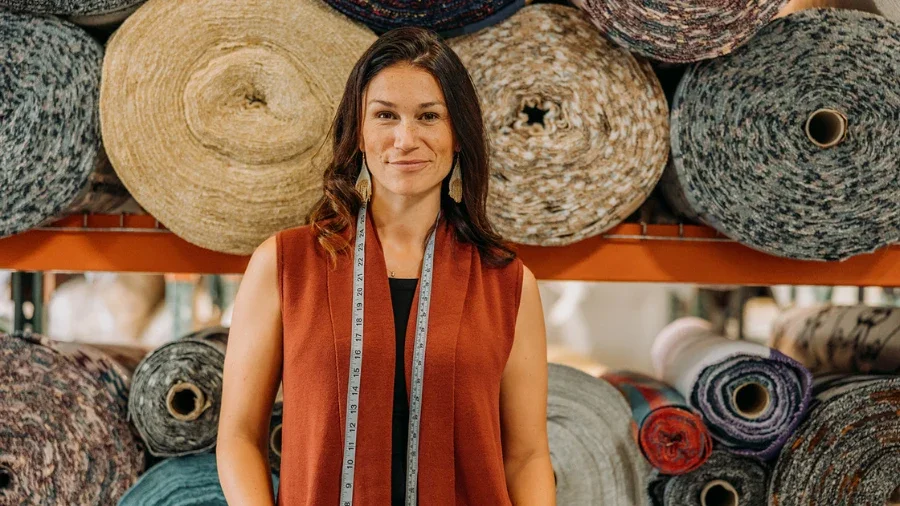
For Pitura, a member of Nipissing First Nation, the responsibility behind MINI TIPI's designs extends beyond their appearance or commercial appeal.
A design can carry cultural teachings, identity and history. Once it becomes a manufactured product, the company also assumes responsibility for how that meaning is communicated.
“For me, it means recognizing that a design is never just a design.”
As MINI TIPI has grown, Pitura says she has become increasingly aware of the stories behind the designs, the relationships that inform them and their impact as they reach customers.
Commercial expansion creates opportunities, but it also makes careful decision-making more important.
The question is not only whether a product will sell. It is whether its development and representation honour the cultural meaning attached to the work.
That distinction is relevant to businesses whose value depends on creative contributions, reputation, community knowledge or specialized expertise.
Growth should not automatically require sacrificing the qualities that make an offering distinctive.
For MINI TIPI, storytelling and cultural responsibility are not additions to the product. They help define its value.
04The campaign is only the invitation

A beautiful product photograph can capture attention. But what happens when the meaning behind that product requires more context than an advertisement can provide?
Bernard encounters that challenge with each launch.
A photograph of a MINI TIPI blanket may be enough to stop someone scrolling. It cannot, by itself, explain the teachings behind a design or the cultural context in which that work exists.
The company therefore treats marketing as the beginning of a conversation.
Design stories appear on cards accompanying purchases, in videos, blog articles, product pages, at markets and through direct conversations with customers. Those discussions can include questions about cultural appreciation and appropriation.
“The campaign is the invitation; the story lives everywhere else.”
This is a particularly useful insight for business owners and marketing executives.
Advertising can create awareness, but a meaningful customer relationship may depend on what happens after that first interaction.
For MINI TIPI, the product experience includes opportunities to understand the artist, the design and the story behind what a customer is purchasing or giving as a gift.
The commercial principle is straightforward: a compelling message attracts interest; a well-developed customer experience gives people reasons to care.
05The people behind the value

One of MINI TIPI's defining commercial practices is its artist royalty program.
The company collaborates with Indigenous artists, recognizing their contributions and providing continuing compensation as their work reaches customers.
Pitura and Bernard describe successful collaboration as something grounded in respect, transparency and a shared understanding of the importance of storytelling.
They emphasize that an artist's identity and contribution should remain connected to the product rather than becoming secondary to the company selling it.
“When the artist is valued, the company can grow with integrity, and customers have the opportunity to connect with the people and stories behind what they bring into their homes.”
Their approach illustrates an important business-model decision: how a company recognizes and shares value with the people whose contributions make its offering possible.
For MINI TIPI, artist relationships are not simply a marketing message. They influence how designs are developed, how contributors are compensated and how products are presented to customers.
It raises a question relevant to almost any industry: as a business grows, are the people contributing to its success continuing to benefit from that growth?
06Scaling a brand is not the same as scaling a workshop
The finished product tells only part of MINI TIPI's story.
Behind a blanket is a process involving design, fabric suppliers, cutting, sewing, finishing and quality control.
The founders describe working with suppliers to bring their designs to fabric before the material reaches the company's Gatineau workshop. There, skilled sewing professionals cut, sew and finish the pieces.
The process gives MINI TIPI control over quality, but it also creates operational challenges that customers rarely see.
A supplier arrives late. A bestseller sells out faster than production can replenish it. A busy season creates competing demands. Finding and training skilled sewing professionals in Canada adds another layer of complexity.
The founders capture the challenge in one sentence:
“Scaling a brand is one thing. Scaling a workshop is a whole other story.”
There is a distinction here that many growing Canadian businesses will recognize.
Generating demand and developing the capacity to fulfil that demand are different management challenges.
A successful marketing campaign can increase customer interest quickly. Production capacity, supplier reliability and employee skills may take much longer to develop.
That tension is particularly important for a company committed to local manufacturing and consistent quality.
MINI TIPI's founders also describe decisions they have deliberately avoided: using cheaper materials or producing more quickly at the expense of their standards.
They want their pieces to become heirlooms, kept and passed down through families. That ambition requires products designed to last and stories worth preserving.
“A beautiful product without its story is just a pattern.”
Their position connects operations directly to the company's value proposition.
Quality and storytelling are not competing priorities. In the founders' view, they belong together.
07Two perspectives can make one stronger partnership
A decade of making decisions together has also shaped how Pitura and Bernard manage disagreement.
They describe bringing different strengths, perspectives and instincts to the business.
Over time, they have learned that the goal is not to determine whose judgment automatically carries greater weight.
Instead, they step back from individual positions and consider what serves MINI TIPI, their team and their shared long-term direction.
They have developed a stronger understanding of when to challenge an idea and when to let it go.
“We don’t need to agree on everything to move forward; we need to trust that we’re working toward the same bigger picture.”
This is a practical leadership lesson for entrepreneurs, professional partnerships and executive teams.
Different perspectives can improve decisions when the people involved respect each other's expertise and remain committed to the same objective.
Agreement is not always the measure of a strong partnership.
Sometimes its strength is demonstrated by the ability to disagree, consider competing priorities and still move forward together.
08When a purchase order becomes an opportunity
For corporate decision-makers, one of the founders' most important insights concerns the distinction between a one-time purchasing decision and a meaningful commercial relationship.
Pitura and Bernard believe engagement with Indigenous businesses should extend beyond visibility, occasional initiatives or symbolic gestures.
They describe meaningful partnerships as relationships built through listening, mutual respect, shared value and a commitment to seeing each other succeed.
Long-term purchasing and procurement can play an important role because recurring business provides consistency and opportunities to plan.
“A purchase order can be much more than a transaction; it can help a business invest in its people, expand its capacity, and plan for the future.”
For commercial banking leaders, procurement teams, professional advisors and business owners, the relevance is immediate.
A transaction may address a current need. A sustained relationship can create greater predictability and opportunities for a supplier to develop capacity over time.
The founders connect this thinking to economic reconciliation.
In their view, organizations demonstrate commitment through ongoing commercial decisions, not simply by including Indigenous businesses in occasional campaigns.
Their perspective raises a useful question for any organization with purchasing authority:
Are we choosing suppliers solely to complete today's transaction, or are we also considering the relationships our decisions can help build?
Meaningful procurement does not require abandoning commercial discipline. It requires recognizing that the quality and continuity of relationships can influence the value they create.
09The measure of the next decade

After ten years in business, the founders could define future success through a larger operation, more products or increased production.
Their answer begins somewhere else.
“Our impact needs to grow faster than our size.”
They envision stronger Indigenous representation in design, the textile industry and homes across Canada.
They want more stories told through textiles and more MINI TIPI products becoming heirlooms passed between generations.
They hope to create additional local employment, develop a team proud of its work and continue giving Indigenous creators opportunities to shine.
They also want MINI TIPI to remain active in its community, giving back and strengthening relationships that endure.
It is an ambitious vision, but one that returns to the same themes that have shaped their first decade: cultural responsibility, collaboration, quality and shared growth.
The company has evolved considerably since Pitura and Bernard began with a children's brand in 2016.
They have learned to recognize unexpected opportunities, navigate difficult manufacturing decisions, share commercial value with artists and develop their own partnership.
Their story demonstrates that entrepreneurial success cannot always be understood by looking only at the products a company sells.
Sometimes its deeper value is found in the people who create those products, the decisions made behind the scenes and the relationships that become stronger along the way.
The stories are carried through the textiles. The business is built through the people and decisions behind them.
And as MINI TIPI enters its second decade, the founders want the impact of those decisions to reach further than ever.
The RÄNDĀ VO͞O Lens
The Builder's Perspective
MINI TIPI's original children's business evolved after the founders identified an unmet need for authentic Indigenous fabrics.
Pivot in the Builder’s IndexThe company's products combine physical quality, authentic Indigenous designs and the stories behind them.
Value Proposition in the Builder’s IndexThe artist royalty program incorporates ongoing creator recognition and compensation into commercial relationships.
Business Model in the Builder’s IndexGrowing customer demand requires corresponding development in production capacity, skilled labour and supplier coordination.
Scale-Up in the Builder’s IndexThe company's decisions affect artists, employees, customers, suppliers and its broader community.
Stakeholder Value in the Builder’s IndexThe founders have chosen to protect quality and storytelling rather than prioritize lower costs or faster output.
Trade-Off in the Builder’s IndexPut It Into Practice
Reflection Room
01 Opportunity
What market gap might you be overlooking because it differs from your original idea?
02 Growth
What would you refuse to compromise as your business expands?
03 Operations
Can your systems and people deliver the demand your marketing creates?
04 Relationships
Who contributes to your success, and how is that contribution recognized?
05 Impact
Ten years from now, what would make you believe the growth was worthwhile?
About MINI TIPI
MINI TIPI is an Indigenous-owned, women-owned Canadian lifestyle brand founded in 2016 by Trisha Pitura and Mélanie Bernard. Based in Gatineau, Quebec, the company creates locally manufactured textile products featuring authentic Indigenous designs and collaborates with Indigenous artists through an artist royalty program.
Pitura, a member of Nipissing First Nation, leads design and artist relations. Bernard leads sales and marketing.
RÄNDĀ VO͞O Intelligence shares original conversations and perspectives from entrepreneurs, executives and business leaders, connecting real-world experiences with practical business knowledge.
RELATED INTELLIGENCE
RÄNDĀ VO͞O Editorial Series

BUILDER PROFILE
Jesse Arnold
Owner & Principal Designer, Inicio Design
Every Square Foot Has a Job
Great spaces don't just make an impression. They strengthen brands, shape customer experiences and help businesses perform.
RÄNDĀ VO͞O Editorial Series

BUILDER PROFILE
Chris Brown
Owner & Broker of Record, EXIT Excel Realty
The Long Game: Real Estate, Trust & Building Lasting Value with Chris Brown
A candid conversation with real estate entrepreneur Chris Brown on building lasting value, earning trust, navigating uncertainty and the relationships that shape long-term business success.
RÄNDĀ VO͞O Editorial Series
BUILDER PROFILE
Mike George
Founder, Aurelius Fine Oils & Balsamic Vinegars
The Aurelius Standard: Why Customer Experience Is a Growth Strategy
Aurelius founder Mike George shares what customer experience, leadership and lasting relationships can teach business leaders about growth.